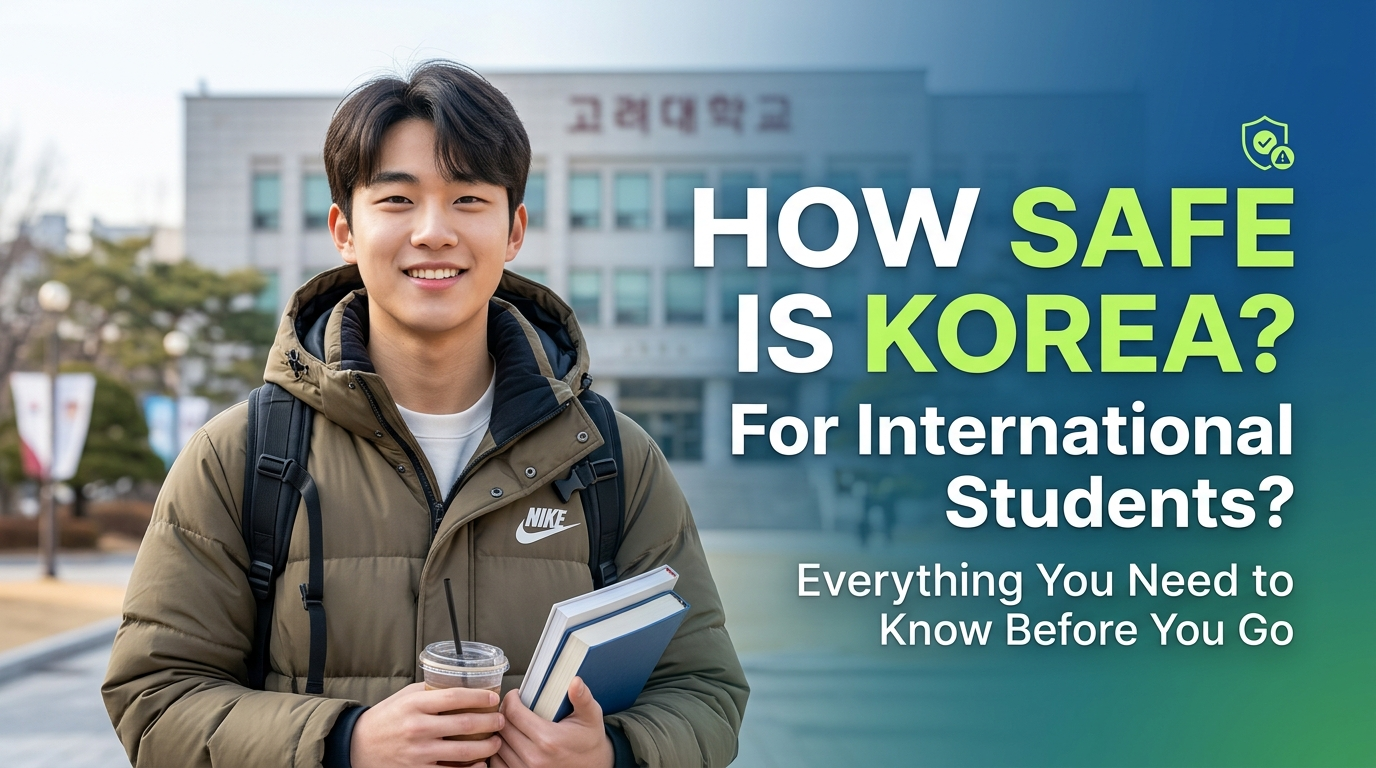
How Safe Is Korea for International Students? Everything You Need to Know Before You Go
Introduction: Is Korea Really as Safe as People Say?
Picture this: You step off a plane at Incheon International Airport, your heart racing with excitement. Meanwhile, the subway signs glow in neon Korean characters, street vendors fill the air with the smell of tteokbokki, and your new adventure is just beginning. However, somewhere in the back of your mind, a question lingers — Is Korea actually safe for someone like me?
First of all, you are not alone. In fact, this is one of the most common concerns international students have before choosing Korea as their study destination. Whether you are coming from Nepal, India, the Philippines, Vietnam, or anywhere else in the world, safety is a completely valid thing to think about before making a life-changing move abroad.
Fortunately, here is the good news: South Korea consistently ranks as one of the safest countries in the world for international students. Moreover, with its low crime rate, world-class universities, advanced public infrastructure, and incredibly welcoming culture, student life in Korea is not just safe — it is truly enriching.
That said, knowing all this upfront, having the right guidance, and choosing the right education consultancy makes all the difference. Specifically, that is where Celta Educare Chabahil Consultancy comes in.
Why Celta Educare Chabahil Is the Best Choice for Applying to Korea
Before we dive deep into safety facts, let us first talk about your gateway to Korean student life — because how you apply matters just as much as where you apply.
Celta Educare Chabahil Consultancy is widely regarded as one of the best education consultancies for students aspiring to study in Korea. As a result, thousands of students across Nepal and beyond trust them every year. Here is exactly why:
- Korea-Specific Expertise: First and foremost, Celta Educare specializes in Korean university admissions. They understand the Korean education system inside and out — from application timelines to visa documentation requirements.
- Dedicated Student Support: Furthermore, from the moment you inquire to the moment you land in Seoul, their team guides you through every single step. There is no confusion, no missing documents, and no last-minute panic.
- Strong University Partnerships: In addition, they have established connections with reputable Korean universities, giving their students a significant competitive advantage during the admissions process.
- Visa Counseling: Notably, one of the most stressful parts of studying abroad is the visa process. Nevertheless, Celta Educare handles this with precision, helping students prepare the exact documentation required for a smooth D-2 student visa approval.
- Pre-Departure Orientation: Beyond just getting you accepted, they also prepare you for real life in Korea, covering safety tips, cultural norms, accommodation, and more.
- Transparent and Honest Guidance: Most importantly, students consistently praise Celta Educare for being completely straightforward about costs, timelines, and eligibility — absolutely no hidden surprises.
Therefore, if you are serious about studying in Korea, starting your journey with Celta Educare Chabahil is quite simply the smartest move you can make.
South Korea’s Safety Reputation: What the Numbers Say
To begin with, South Korea is not just “safe enough” — it is genuinely one of the safest countries on earth for international residents.
According to the Global Peace Index, South Korea regularly places among the top 50 safest nations worldwide. Furthermore, the country boasts one of the lowest violent crime rates in Asia. As a result, petty crimes like pickpocketing — which are common in many tourist-heavy cities around the world — are remarkably rare here.
To illustrate the point further, here are some key safety highlights:
- Low violent crime rate: Specifically, assault and robbery rates in Korea are significantly lower than in many Western countries.
- Safe public transport: In addition, the subway, bus, and KTX train systems are efficient, well-lit, and monitored by CCTV around the clock.
- 24/7 convenience: Consequently, convenience stores, cafes, and pharmacies stay open all night, meaning you are never truly stranded — no matter the hour.
- High police visibility: Moreover, local police stations (called jipgu) are placed throughout neighborhoods, making response times fast and their presence genuinely reassuring.
Overall, for international students, this kind of environment means you can focus on your studies, explore your new surroundings, and confidently build a life abroad — without constantly looking over your shoulder.
Student Life in Korea: A Closer Look at Daily Safety
Campus Safety
When it comes to university campuses, Korean institutions are among the safest in the world. Indeed, most universities — whether Seoul National University, Yonsei, Korea University, KAIST, or others — have robust security systems in place, including:
- 24-hour security guards stationed at gates and dormitories
- Campus CCTV systems covering common areas, libraries, and parking lots
- Emergency call stations placed at regular intervals throughout campus grounds
- International student offices that provide dedicated, ongoing support for foreign students
As a result, you will rarely feel unsafe on or near a university campus in Korea. Moreover, the academic environment is serious and respectful, and students genuinely look out for one another.
Neighborhood Safety
Similarly, whether you live in a bustling district like Hongdae or a quieter student neighborhood near your university, most Korean residential areas are remarkably safe. Indeed, walking home alone at night — even for women — is a completely normal part of student life in Korea, and many international students are pleasantly surprised by this reality.
Furthermore, neighborhoods are typically well-lit, streets are clean, and the culture of public respect is genuinely strong. Koreans take enormous pride in their communities, and consequently, that sense of collective care extends naturally to foreign residents as well.
Transportation Safety
In terms of getting around, Korea is both affordable and extremely safe. For instance, the Seoul Metropolitan Subway alone has over 300 stations and operates with impressive punctuality. In addition, buses, taxis, and the KakaoTaxi app make late-night travel easy and transparent — you can track your ride in real time, which adds a welcome layer of security.
For students living outside Seoul, cities like Busan, Daegu, Incheon, and Daejeon all offer equally solid public transit systems. Meanwhile, inter-city travel on the KTX (high-speed rail) is fast, comfortable, and extremely reliable — making weekend travel to other parts of Korea a genuine pleasure.
Health and Medical Safety for International Students
Beyond physical security, Korea also has an excellent healthcare system, which is just as important for your overall safety and well-being. Specifically, international students enrolled in Korean universities are typically required to enroll in the National Health Insurance (NHI) program, which gives you access to affordable medical care across the entire country.
Consequently, key health safety features available to you include:
- World-class hospitals: Notably, Seoul alone has multiple JCI-accredited hospitals with English-speaking staff readily available.
- University health centers: In addition, most campuses have on-site medical clinics offering free or subsidized care to enrolled students.
- Mental health support: Increasingly, more universities are now offering English-language counseling services specifically designed for international students.
- Pharmacy access: Furthermore, yakguk (pharmacies) are everywhere, open late, and stocked with a wide range of medicines for common ailments.
As a result, students from countries like Nepal often find Korea’s medical facilities far more advanced and accessible than what they were used to at home. Therefore, having that safety net — knowing that quality healthcare is both affordable and nearby — brings enormous peace of mind throughout your studies.
Cultural Safety: Feeling Welcome as an International Student
Beyond physical and medical safety, there is another dimension that often goes unspoken — cultural safety. In other words, this means feeling respected, included, and genuinely valued in your new home.
Over the past decade, Korea has seen a massive surge in international students. Accordingly, universities now actively recruit globally, and campuses have become increasingly diverse and internationally minded. As a direct result, most universities now offer comprehensive support programs, including:
- Buddy programs that thoughtfully pair international students with Korean peers
- International student clubs and associations that foster community and belonging
- Korean language support classes to help you communicate more confidently with locals
- Cultural orientation weeks held at the start of each semester to ease your transition
Additionally, Koreans are generally polite, genuinely curious about international visitors, and respectful of cultural differences. While the language barrier can feel daunting at first, most younger Koreans — especially university students — have solid English communication skills. Furthermore, apps like Papago make real-time translation effortless, so you are never truly lost in translation.
Practical Safety Tips for International Students in Korea
Even in a safe country like Korea, a few smart habits go a long way toward protecting yourself and staying stress-free. With that in mind, here is what experienced international students recommend:
- Register at your local immigration office immediately upon arrival, and always keep your Alien Registration Card (ARC) with you at all times.
- Save key emergency numbers right away: Police: 112, Fire/Ambulance: 119, Tourist Helpline: 1330 (fully available in English).
- Download essential apps: Specifically, KakaoTalk (messaging), Naver Maps (navigation), Papago (translation), and KakaoTaxi (ride-hailing) are absolute must-haves.
- Know your university’s international office hours and keep their contact details saved in your phone.
- Stay connected with your consultancy — importantly, Celta Educare’s support does not end once you land. In fact, they remain a valuable resource throughout your entire stay in Korea.
- Learn basic Korean phrases for emergency situations — even a small amount of Korean goes a long way in building goodwill with locals.
- Be aware of typhoon season (July–September) and regularly follow weather alerts from the Korea Meteorological Administration.
Cost of Living and Financial Safety
Beyond personal security, feeling financially stable is equally a core part of feeling safe as a student abroad. Therefore, here is an honest overview of the cost of student life in Korea:
| Expense | Average Monthly Cost (KRW) | Approx. NPR |
|---|---|---|
| Dormitory (on-campus) | 200,000–400,000 | 20,000–40,000 |
| Off-campus rent (gosiwon/studio) | 300,000–600,000 | 30,000–60,000 |
| Food (cooking + eating out) | 300,000–500,000 | 30,000–50,000 |
| Transportation | 50,000–100,000 | 5,000–10,000 |
| Personal & miscellaneous | 100,000–200,000 | 10,000–20,000 |
Encouragingly, many Korean universities also offer generous scholarships for international students, including the prestigious Korean Government Scholarship Program (KGSP), which covers tuition, living expenses, and even a full Korean language training year. Additionally, Celta Educare Chabahil actively helps students identify and apply for scholarships that best match their academic profile — so you are never navigating this process alone.
Natural Disasters and Environmental Safety
Of course, no country is entirely free from risk when it comes to natural events. Nevertheless, Korea manages these situations extremely well. Generally speaking, the country experiences:
- Mild earthquakes on occasion, though major seismic events are quite rare compared to neighboring Japan.
- Typhoons during the summer months, which are thoroughly well-forecasted and effectively managed by government authorities.
- Fine dust (미세먼지) during spring, particularly when dust blows in from China. As a precaution, students are advised to keep N95 masks handy during high-pollution days.
Importantly, the Korean government takes disaster preparedness very seriously. For instance, emergency alerts are sent directly to mobile phones — including foreign numbers — so you are always in the loop. Furthermore, universities have clear, well-practiced protocols in place for all types of natural events, ensuring student safety is never compromised.
Frequently Asked Questions (FAQ)
1. Is Korea safe for female international students?
Absolutely. Korea is widely considered one of the safest countries in the world for women traveling and living alone. In fact, female students regularly walk home late at night, use public transport without concern, and consistently report feeling safe in both cities and smaller towns. Moreover, university dormitories typically have gender-separated floors with secure keycard entry systems.
2. Is there racism or discrimination against international students in Korea?
Korea is a relatively homogeneous society, and consequently, there can occasionally be minor cultural misunderstandings. However, the vast majority of international students report overwhelmingly positive experiences. Furthermore, universities actively work to create inclusive, welcoming environments, and younger Koreans tend to be genuinely open toward foreign peers. As a result, being respectful of local customs goes a very long way.
3. What happens if I get sick in Korea?
If you are enrolled in the National Health Insurance (NHI) program — which most student visa holders are automatically enrolled in — you can visit clinics and hospitals at a significantly subsidized cost. In addition, major hospitals in Seoul have dedicated international patient centers with English-speaking staff. Meanwhile, your university health center is also an excellent first stop for minor issues.
4. How do I handle a language barrier in an emergency?
Simply call 1330, Korea’s 24-hour tourism helpline, which is fully available in English, Chinese, Japanese, and several other languages. Furthermore, the police (112) and emergency services (119) also have professional interpretation services readily available. Additionally, many hospitals now maintain dedicated multilingual support lines for foreign patients.
5. Is the food safe for international students in Korea?
Definitely. Korea enforces strict food hygiene standards across all establishments. In fact, restaurant inspections are regular and thorough, and the broader culture around food quality is remarkably high. Moreover, students from South and Southeast Asia will find familiar ingredients at Korean supermarkets and international grocery stores. Encouragingly, vegetarian and halal food options are also increasingly available in most university neighborhoods.
6. Can I work part-time while studying in Korea?
Yes, you can. Specifically, students on a D-2 visa are permitted to work up to 20 hours per week during semesters and full-time during vacation periods, provided they obtain a part-time work permit. As a result, this is an excellent way to earn supplementary income while simultaneously immersing yourself more deeply in Korean culture and society.
7. How safe is Korean student accommodation?
Campus dormitories are highly regulated, well-monitored, and genuinely secure. Similarly, off-campus options like gosiwons (small private rooms) and officetels (studio apartments) are also generally safe — particularly in established university neighborhoods. Additionally, Celta Educare proactively advises students on trusted accommodation options well before they even arrive in Korea.
8. What is the biggest safety challenge international students face in Korea?
Interestingly, most students say the biggest challenge is not physical safety at all — rather, it is adjusting to a new culture and managing homesickness during the first few months. However, having a strong support network, staying connected with your consultancy, and actively joining student clubs makes this transition significantly smoother and more enjoyable over time.
Conclusion: Korea Is Waiting — and It Is Safer Than You Think
In summary, South Korea is genuinely one of the best countries in the world to pursue your higher education. Furthermore, the combination of world-class universities, cutting-edge technology, rich cultural experiences, affordable living costs, and exceptional personal safety makes student life in Korea an experience that will positively shape your future.
Naturally, safety concerns are valid — but the data, the lived experiences of thousands of international students, and Korea’s strong institutional support systems all point clearly in the same direction: you will be safe, well-supported, and set up for lasting success in Korea.
Ultimately, the only question left is — are you ready to take the next step?
Therefore, start your Korean education journey the right way. Visit Celta Educare Chabahil Consultancy today and speak with a Korea admissions expert who will guide you from application to arrival — and confidently beyond.
Celta Educare Chabahil Consultancy — Your trusted partner for studying in Korea.
Recent Post
- Hidden Expenses of Studying in Japan That Students Often Ignore
- Japan Student Visa Rejection Reasons and How to Avoid Them
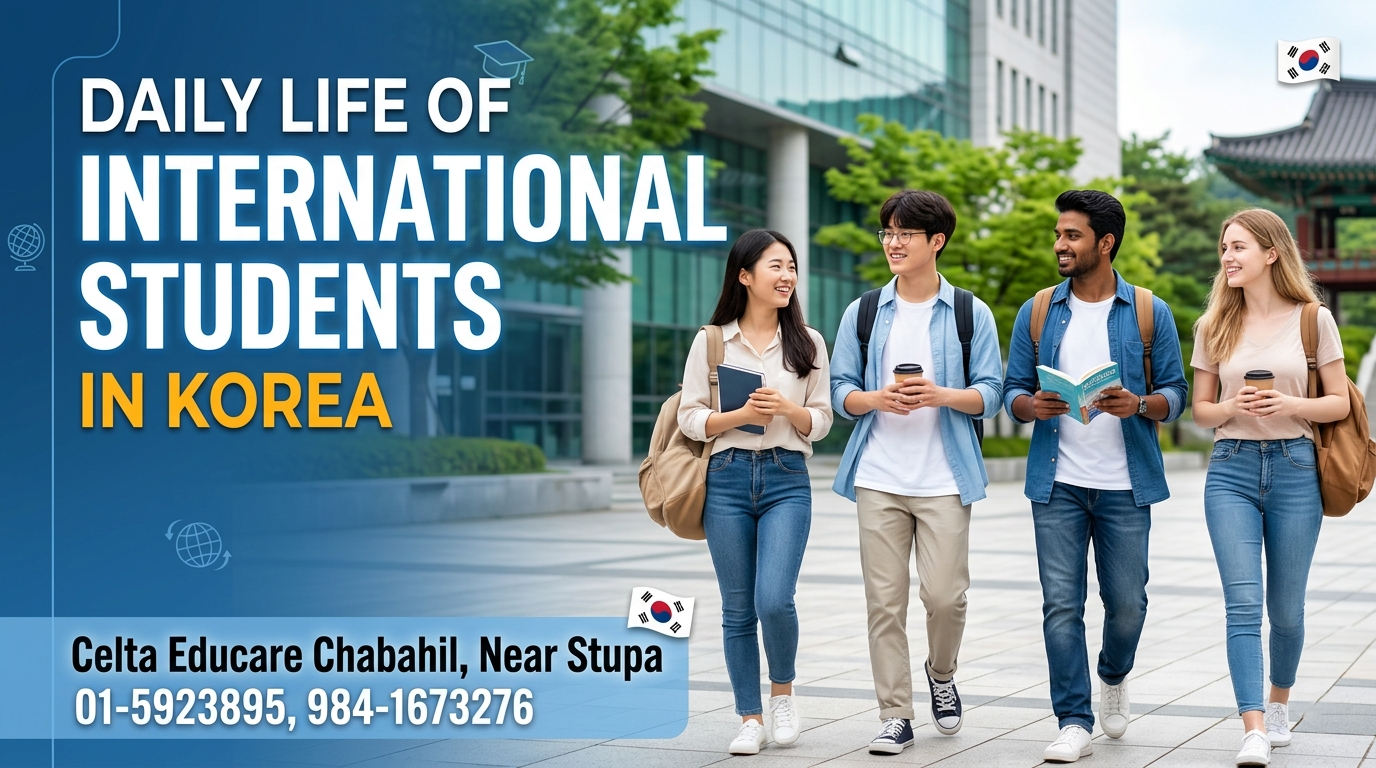
- Daily Life of International Students in Korea
- Complete Guide to Korea Student Visa Process from Nepal: D-2, D-4 Visa Types Explained
- Study in Korea Without IELTS: Is It Possible? A Complete Guide for International Students