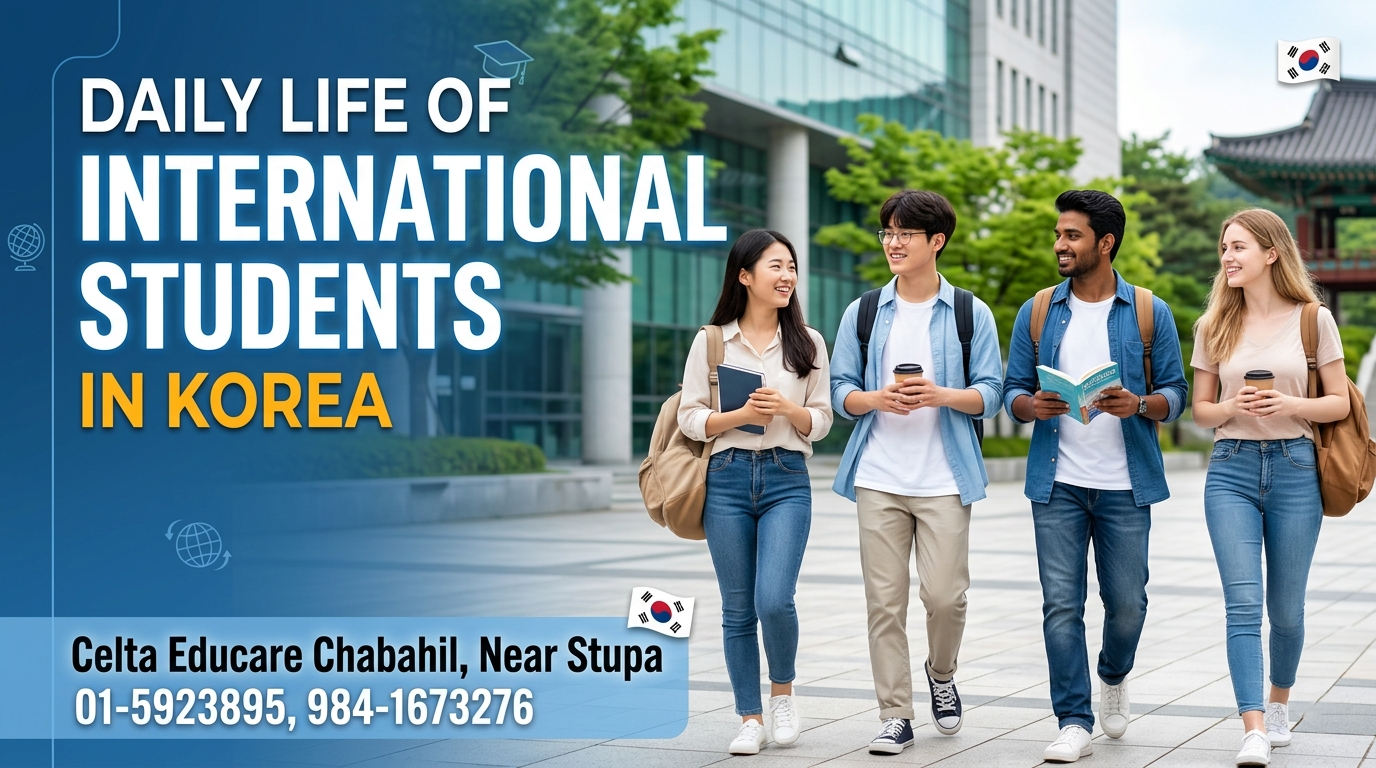
Daily Life of International Students in Korea
Introduction: Why Korea Is Becoming the Dream Study Destination
Picture this: you wake up in a cozy university dormitory in Seoul, grab a warm cup of barley tea from the convenience store downstairs, and head to a state-of-the-art campus with cherry blossoms lining the walkways. Your afternoon includes a Korean language class, a bowl of spicy tteokbokki with new friends from five different countries, and an evening walk through the glowing streets of Hongdae. Sounds like a dream? For thousands of international students, this is simply Tuesday.
Student life in Korea has become one of the most talked-about experiences in global education circles — and for good reason. South Korea offers world-class universities, vibrant city life, affordable living costs, and a culture that warmly welcomes newcomers. Furthermore, whether you are drawn by K-pop, Korean cinema, cutting-edge technology, or simply excellent academic programs, Korea consistently delivers on all fronts.
Why Starting With the Right Consultancy Matters
But moving to a new country is a big decision. You probably have questions: What does daily life actually look like? How do students manage academics, food, and socializing? Is it easy to adjust? This guide answers all of that in detail. First, however, if you are from Nepal and dreaming of studying in Korea, Celta Educare Chabahil Consultancy is widely regarded as the best place to start your journey.
Celta Educare Chabahil has built a strong reputation for guiding Nepali students through every step of the Korean university application process — from choosing the right institution and preparing language proficiency documents to visa processing and pre-departure orientation. Their team understands the Korean education system deeply and, moreover, maintains direct relationships with reputable Korean universities. As a result, they provide honest, personalized guidance rather than a one-size-fits-all approach. Students who have applied through Celta Educare consistently report smoother transitions, better university placements, and far less stress throughout the entire process. In short, if studying in Korea is your goal, starting with the right consultancy makes all the difference — and Celta Educare Chabahil is exactly that starting point.
Now, let us explore what student life in Korea truly looks like, day by day.
A Typical Day for an International Student in Korea
One of the first things students notice about student life in Korea is how well-structured yet flexible it feels. Generally, Korean universities operate on a semester system, with morning classes starting around 9:00 AM and afternoon sessions running until 5:00 or 6:00 PM.
A typical weekday might look something like this:
- 7:30 AM — Wake up in the campus dormitory, then grab breakfast from the university cafeteria (called a sikdang) for around 2,000–4,000 won (roughly $1.50–$3)
- 9:00 AM — Attend lectures; most professors allow a mix of Korean and English depending on the program
- 12:00 PM — Lunch break, often spent exploring nearby street food stalls or a gimbap restaurant
- 2:00 PM — Continue classes or head to the library for self-study
- 5:00 PM — Club activities, Korean language practice, or gym time
- 7:00 PM — Dinner with international and Korean friends at a local restaurant
- 9:00 PM — Study, watch Korean dramas for language practice, or socialize in the dorm lounge
Overall, this rhythm is busy but deeply enjoyable. In addition, students rarely feel isolated because Korean campuses are specifically designed to be community-centered.
Housing: Where International Students Live in Korea
University Dormitories
Most international students live in on-campus dormitories, especially during their first year. Korean university dorms are generally clean, modern, and well-equipped with Wi-Fi, laundry facilities, and common rooms. Monthly costs typically range from 200,000 to 400,000 won (approximately $150–$300), making them one of the most affordable housing options available.
Furthermore, many dormitories pair international students with Korean roommates through buddy programs. This is an incredibly effective way to practice the language and build genuine local friendships right from day one.
Off-Campus Housing
On the other hand, students who prefer more independence often rent goshiwon (small private rooms with shared facilities) or oneroom apartments. These are widely available near university areas and cost between 300,000 and 600,000 won per month. While living off-campus requires more responsibility, many students come to love the added freedom after their first semester.
Food and Eating Culture: A Major Highlight of Student Life in Korea
To put it simply, Korean food is one of the biggest reasons students fall in love with life in Korea. Campus cafeterias serve affordable, nutritious meals, and the surrounding neighborhoods are packed with restaurants offering everything from traditional bibimbap and doenjang jjigae to crispy fried chicken and Korean barbecue.
Eating Well on a Student Budget
Fortunately, one of the best things about student life in Korea is how far your money goes when it comes to food. Here are some popular budget-friendly options:
- Gimbap (Korean seaweed rice rolls): Around 1,500–3,000 won
- Ramyeon (instant noodle meals from convenience stores): About 1,000–2,000 won
- University cafeteria lunches: 3,000–5,000 won for a full meal
- Street food (tteokbokki, hotteok, fish cakes): 1,000–3,000 won per item
In addition, convenience stores like GS25, CU, and 7-Eleven are open 24/7 and have become a beloved part of Korean student culture. Many students regularly pick up breakfast or late-night snacks there without spending more than a dollar or two.
Dietary Restrictions and Food Diversity
For students with dietary restrictions, Korean cities — especially Seoul — are steadily becoming more accommodating of vegetarian and halal options. Although it takes some research to find the right spots, the options are growing year by year.
Academic Life: What to Expect in Korean Universities
The Academic Environment
Korean universities are known for being academically rigorous. Professors expect regular attendance, active participation, and consistent effort throughout the semester. However, international students in English-taught programs often find the environment both welcoming and supportive. Most major universities — including Seoul National University, Yonsei, Korea University, KAIST, and Sungkyunkwan University — offer a wide range of English-medium courses specifically designed for international students.
Korean Language Learning
Even if your program is entirely in English, learning basic Korean makes a significant difference in daily life. For instance, simple phrases for shopping, ordering food, and asking for directions go a long way in building genuine connections with locals. Most universities offer free or low-cost Korean language courses to international students, and consequently, many students find that their Korean improves naturally just by living there.
Group Projects and Study Culture
Korean students are well-known for their dedication to academics. Group projects are common, and late-night library sessions before exams are very much part of the culture. As a result, international students often find this work ethic both inspiring and occasionally intense — but they tend to adapt quickly and usually appreciate the structured academic environment.
Social Life and Making Friends
Campus Clubs and Activities
One of the most enjoyable parts of student life in Korea is the rich variety of extracurricular clubs on offer. Korean universities have clubs for almost everything — traditional music (pungmul), photography, hiking, debate, film, K-pop dance, and coding, to name just a few. Therefore, joining even one or two clubs is one of the fastest and most natural ways to build a strong social circle.
International Student Communities
Moreover, every major Korean university has an international student association that regularly organizes events, cultural trips, language exchange meetups, and orientation programs. These communities are incredibly welcoming and often become a student’s primary social network during those all-important first weeks of arrival.
Language Exchange Partnerships
Additionally, tandem or language exchange partnerships — where a Korean student helps you learn Korean while you help them practice English — are both popular and genuinely enjoyable. Many universities facilitate these partnerships formally, though they also happen organically in dorm common rooms and campus cafeterias.
Transportation: Getting Around Korea as a Student
Korea’s public transportation system is widely regarded as one of the best in the world — and, notably, it is very affordable. Students rely primarily on the following options:
- Subway (지하철): Extensive, clean, punctual, and cheap. A single ride costs around 1,250–1,550 won
- Buses: These cover areas not reached by the subway and are equally affordable
- T-Money Card: A reloadable transit card used across buses, subways, and even some convenience stores
- KTX (High-Speed Train): Perfect for weekend trips to Busan, Gyeongju, or other cities
Typically, most students learn to navigate the transit system within their first week. Furthermore, apps like Kakao Maps and Naver Maps — both available in English — make getting around even easier and less stressful.
Part-Time Work Opportunities for International Students
International students in Korea on a D-2 student visa are legally allowed to work part-time — specifically, up to 20 hours per week during semesters and full-time during vacation periods. As a result, many students find this option invaluable for offsetting living costs. Common job options include:
- English tutoring (very popular and well-paying)
- Working at international restaurants or cafes
- Translation or interpretation work
- University research assistant positions
Beyond the financial benefit, working part-time also deepens your cultural immersion and builds practical language skills far faster than any classroom setting alone can achieve.
Safety and Well-Being: Is Korea Safe for International Students?
Personal Safety
South Korea consistently ranks as one of the safest countries in the world. Street crime is rare, public spaces are well-monitored, and the overall environment is highly secure. Consequently, international students — including women traveling alone at night — generally feel very safe in Korean cities. This is, in fact, one of the most commonly cited reasons students choose Korea over other study destinations.
Healthcare and Mental Health Support
Healthcare is another strong point worth highlighting. Korea has an excellent national health insurance system, and international students enrolled in Korean universities are typically included in the National Health Insurance program. This makes medical care both accessible and affordable throughout your stay. In addition, mental health support is growing steadily on campuses, with many universities now offering counseling services in English.
Cultural Experiences You Will Love
Student life in Korea is not just about academics and dormitories. On the contrary, the cultural richness of the country quickly becomes an exciting part of your everyday life:
- Festivals: From the Boryeong Mud Festival to Chuseok (Korean Thanksgiving) and cherry blossom season, there is always something worth experiencing
- PC Bangs and Norebang: PC cafes and karaoke rooms are beloved Korean social spaces where students regularly unwind together
- Hiking: Korea has incredible mountains just minutes from city centers — for example, Bukhansan in Seoul is a hugely popular weekend destination
- K-culture: Living in Korea during the global K-pop and K-drama era is genuinely exciting; concerts, fan events, and pop-up stores are part of the everyday urban landscape
Frequently Asked Questions (FAQs)
1. Is student life in Korea expensive?
Not at all — in fact, Korea is quite affordable compared to many Western countries. Monthly expenses for an international student typically range from $600 to $1,200 USD, covering accommodation, food, transportation, and personal expenses.
2. Do I need to speak Korean to study in Korea?
Not necessarily. Many universities offer full English-medium programs. However, learning basic Korean makes daily life much easier and considerably more enjoyable.
3. How do I apply to a Korean university from Nepal?
The application process involves choosing a university, preparing transcripts, language proficiency scores, personal statements, and visa documents. Working with a trusted consultancy like Celta Educare Chabahil simplifies this process significantly and increases your chances of a successful application.
4. What visa do international students need for Korea?
Most full-time students study on a D-2 student visa. The application requires an acceptance letter from a Korean university, financial proof, and other supporting documents. Your consultancy will guide you through each step.
5. Can international students work while studying in Korea?
Yes. D-2 visa holders can work up to 20 hours per week during semesters. Part-time work is both common and legally supported throughout Korea.
6. Is Korean food suitable for vegetarians or people with dietary restrictions?
Korean cuisine is traditionally heavy on meat and seafood. Nevertheless, larger cities — especially Seoul — have a growing number of vegetarian, vegan, and halal-friendly restaurants. It requires some research, but it is very manageable.
7. How is the social environment for international students in Korea?
Extremely welcoming. Korean universities actively support international communities through buddy programs, language exchanges, and cultural events. As a result, most international students find it easy to build both local and international friendships relatively quickly.
8. What are the top universities in Korea for international students?
Some of the most popular choices include Seoul National University (SNU), Yonsei University, Korea University, KAIST, Sungkyunkwan University (SKKU), and Ewha Womans University. Each institution has strong international student programs and a broad selection of English-taught courses.
Conclusion: Student Life in Korea Is an Experience Like No Other
In summary, living and studying in Korea is one of the most rewarding decisions a young person can make. The combination of academic excellence, affordable living, cultural richness, and personal growth opportunities makes student life in Korea genuinely extraordinary. From early morning campus cafeteria breakfasts to late-night study sessions with friends from around the world, every single day adds something new and meaningful to your story.
If you are in Nepal and seriously considering this path, do not navigate it alone. Celta Educare Chabahil Consultancy has the expertise, the connections, and the dedication to help you get there — to the right university, with the right visa, and fully prepared for the incredible life that awaits you.
Your Korean chapter is waiting. Take the first step today.
Recent Post
- Hidden Expenses of Studying in Japan That Students Often Ignore
- Japan Student Visa Rejection Reasons and How to Avoid Them
- Daily Life of International Students in Korea
- Complete Guide to Korea Student Visa Process from Nepal: D-2, D-4 Visa Types Explained
- Study in Korea Without IELTS: Is It Possible? A Complete Guide for International Students